Bedding & Sleep Comfort
Wool Mattress Pads: Temperature Balance, Care, and Fit
A wool mattress pad can add a gentle cushion to a bed while helping manage the moisture and warmth that build up overnight. The appeal is easy to understand: a little more softness, a breathable layer between sleeper and mattress, and a natural fiber valued for its ability to respond to changing conditions. But wool bedding is not one-size-fits-all. Fill, cover, attachment, mattress depth, and care instructions all shape how a pad feels and performs.
Here’s what to know before deciding whether wool belongs in your bedding—and how to make a thoughtful choice for your sleep environment, whether you’re settling in for a cool Washington winter or a milder night in another season.
What a wool mattress pad does—and what it doesn’t
A mattress pad sits on top of the mattress, beneath the fitted sheet. Depending on its construction, it may provide a modest amount of cushioning, protect the sleep surface from routine wear, or contribute to a more comfortable-feeling bed. A wool-filled version adds loft through its batting and creates a textile layer that can absorb and release moisture.
That last quality is part of wool’s appeal. During sleep, people naturally release heat and moisture. A breathable layer may help keep the bed feeling less clammy by taking up some moisture and allowing it to disperse. Wool is also often described as temperature-regulating: rather than acting like a heater or air conditioner, it can help buffer changes in the immediate sleep environment. The effect varies with the fill, fabric, room conditions, bedding layers, and individual comfort preferences.
It’s important to keep expectations realistic. A pad is not a substitute for a mattress that has lost its support, and it cannot correct a mattress that feels fundamentally too firm or too soft. Pads generally provide a finishing layer, not the deep contouring or substantial pressure relief associated with a thick topper. If you wake with persistent discomfort, or suspect a health issue is affecting sleep, a bedding change may not address the underlying cause.
Terminology can be confusing. “Pad” and “topper” are sometimes used loosely, but a topper is typically thicker and intended to change a bed’s feel more noticeably. Pads are often slimmer and may focus on light cushioning, mattress protection, or both. Check the product’s construction and stated purpose rather than relying on its name alone.
Why wool can feel comfortable across seasons
Wool fibers have a naturally crimped structure, and wool batting can create small spaces that hold air. In bedding, that loft can provide a soft, lightly cushioned surface without necessarily feeling dense. Wool also absorbs moisture vapor, which may help the sleep surface feel more balanced for people who notice dampness or overheating during the night.
“Temperature regulation” doesn’t mean every wool pad will feel cool, or that it will prevent night sweats. Room temperature, humidity, pajamas, sheets, mattress materials, and the number of blankets on the bed all matter. A thick comforter can still trap warmth, and a warm bedroom may remain uncomfortable even with breathable bedding. A pad is one part of a larger sleep setup—not a guarantee of a particular temperature.
Wool may be worth considering if you like natural fibers, want a lightly cushioned layer, or experience a sleep surface that feels stuffy under less-breathable bedding. It may be less suited to someone who wants a waterproof barrier, a noticeably plush transformation, or a product that can be tossed into the washing machine without checking special instructions. Different needs call for different constructions.
The cover matters as much as the filling. Cotton is common because it has a soft hand and can allow airflow; the weave and weight influence how it feels against the body. A smooth sateen shell may feel different from jersey or percale. Since the pad sits beneath a fitted sheet, the cover is not always directly against skin, but its breathability and construction still influence the overall bedding system.
Compare the fill, not just the label
“Wool-filled” describes a broad category rather than a single recipe. Pads may use wool alone, wool blended with another batting, or a wool layer inside a more complex construction. The amount and arrangement of fill affect loft, weight, resilience, and how evenly the pad lies. If a label lists a blend, look at the proportions so you know what makes up the filling.
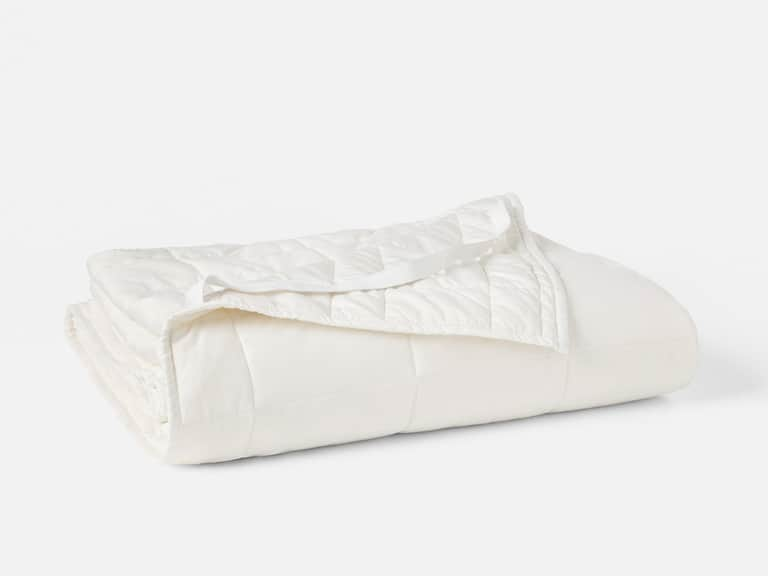
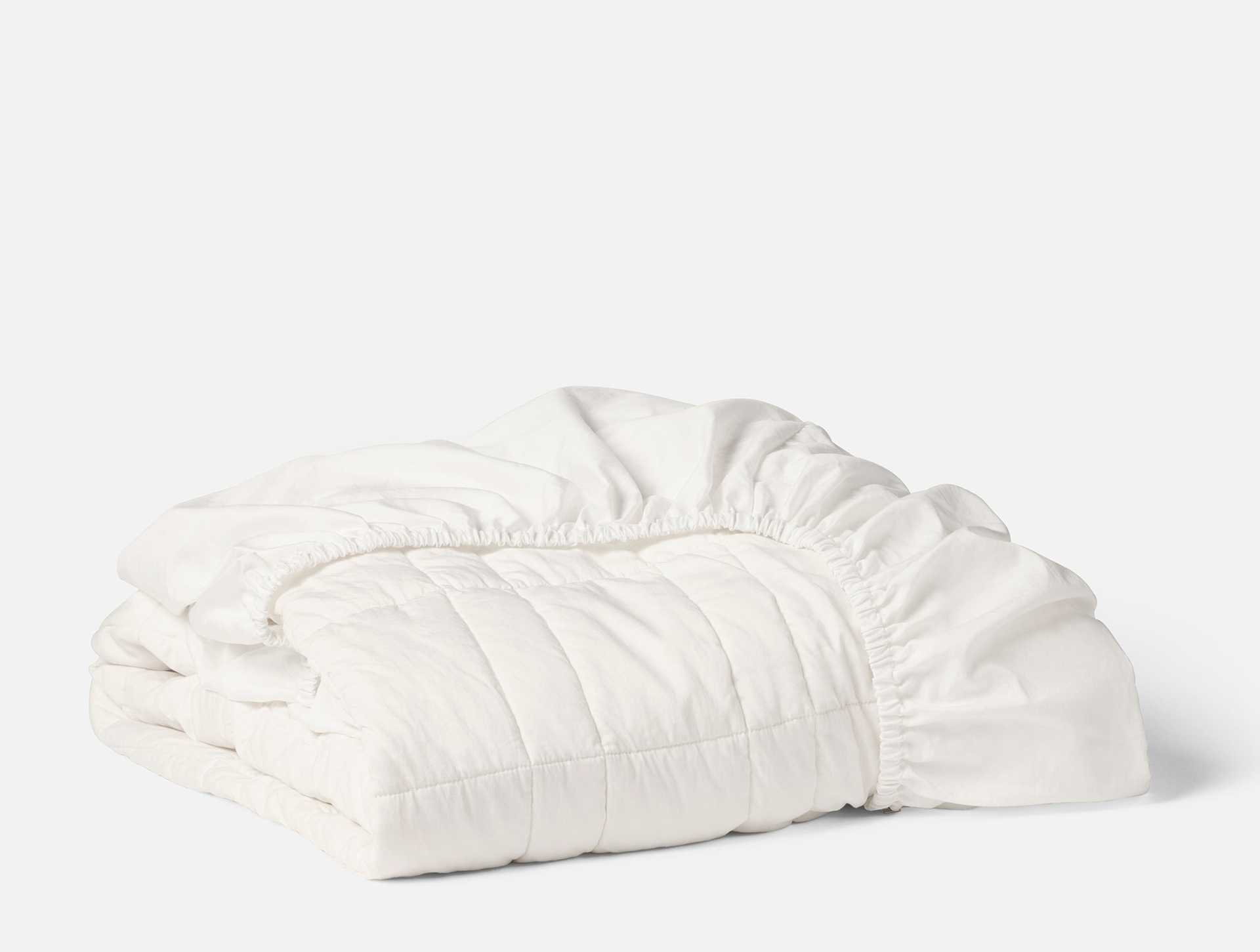
For example, the Washable Wool Filled Mattress Pad is described as having a fill of 85 percent NATIVA wool from Uruguay and 15 percent plant-based batting, with an organic cotton sateen shell. Its stated care directions are cold washing on a gentle cycle and tumble drying on low. Those details make it a useful example of why a wool pad’s composition and maintenance instructions should be considered together—not as interchangeable features across all wool bedding.
Wool can have a natural scent, especially when new or exposed to moisture. Sensitivity varies, and some people may prefer another fiber or need time to air out a new item according to its care guidance. If you have a known allergy or sensitivity, review the full materials information and consider your own experience rather than assuming that “natural” automatically means suitable for everyone.
Certifications and sourcing statements can also be relevant, but they should be read precisely. A claim about the wool does not necessarily apply to every part of the finished product, such as the shell, thread, or elastic. Look for clear descriptions of which materials are covered by a certification or traceability program, and avoid treating a broad sustainability phrase as a substitute for specific information.
Fit is a comfort issue, too
A pad that shifts, bunches, or pulls free at the corners can disrupt the bed even if its materials feel good. Before comparing fit styles, measure the mattress from the top surface to the base, including any existing topper or protective layers that will remain underneath. Also note the mattress’s length and width. Standard sizes are common, but a mattress that is unusually deep—or has a separate topper—may need extra attention.
Wool pads may use fitted skirts, elastic corner bands, or straps. A fitted style wraps around the mattress edges, while corner bands or straps anchor the pad over the top. Each approach has trade-offs. A skirt can create a neat, full-coverage fit but must accommodate the mattress depth. Bands and straps may be simpler to place, though they can move if they are not secure or if the dimensions are poorly matched.
Check the stated pocket depth or recommended mattress thickness rather than assuming that a pad will fit because the size name matches. “Queen,” for instance, describes the sleeping surface dimensions; it does not tell you whether the skirt can stretch around a tall mattress. If the pad is designed with corner straps, confirm that they can reach around the mattress and any layer beneath it.
After putting a new pad on the bed, smooth it from the center outward and check that the corners remain in place when you move. Then add the fitted sheet and lie down as you normally would. Notice whether the pad stays flat, whether the sheet still fits comfortably, and whether the additional layer changes the bed’s feel more than you wanted. Small fit details can make a significant difference to everyday comfort.
Care varies—read the label first
One of the most consequential differences between wool pads is how they can be cleaned. Some are designed for machine washing; others specify dry cleaning, spot cleaning, or limited care. Wool can shrink, felt, or lose its shape if handled in a way that conflicts with the manufacturer’s directions. A washable claim should not be taken to mean that every wash cycle, detergent, or drying method is appropriate.
Before washing, check the care label and any instructions supplied with the pad. Confirm the water temperature, cycle, detergent guidance, and drying method. If the directions call for a gentle cold wash, for example, a hot cycle may be a poor choice even if the fabric looks sturdy. Likewise, a pad that says “dry clean” should not be put in a home washer simply because another wool product can be washed at home.
Machine capacity matters. A bulky pad can become heavy when wet and may not move freely in a small washer. Overcrowding can prevent thorough cleaning and put stress on the item. If the care label permits machine washing but the pad will not fit comfortably, a larger-capacity machine or a professional cleaning service may be more practical. Follow the product’s specific directions rather than improvising.
When drying, use only the method stated on the label. Some washable options allow low-heat tumble drying; others may require air drying. If air drying is permitted, support the pad evenly so wet filling does not collect in one area. Make sure it is fully dry before putting it back on the bed. Lingering dampness can leave an unpleasant odor and may affect the bedding over time.
Between washes, airing the bed and changing sheets regularly can help keep the sleep surface fresh. A removable pad is not automatically a waterproof protector. If protection from spills, accidents, or other liquids is a priority, look for a layer specifically described as waterproof and check whether it changes the feel or breathability of the bed. Some households may use a protective barrier beneath a comfort layer, provided the combination fits securely and follows the care directions for each item.
Is a wool pad right for your sleep environment?
Think about how your room behaves throughout the year. Washington state includes varied conditions, from damp coastal areas to hotter inland summers and colder winter nights. Washington, D.C., has its own seasonal swings, including humid periods and chilly weather. That regional variety makes one universal bedding recommendation impossible: a pad that feels comfortable in one home may feel too warm, too light, or too high-maintenance in another.
Start with your actual experience. Do you wake feeling damp? Does your mattress surface feel chilly at first and warm later? Are you looking for a little cushioning, or trying to solve a bigger comfort problem? Do you have a washer that can accommodate a bulky pad? These practical questions often clarify the choice better than a list of generic benefits.
Also consider the rest of the bed. A breathable pad cannot compensate for sheets, blankets, or a room that retain too much heat for you. Likewise, someone who is cold may find that a lightweight wool layer contributes to a cozier bed, but the pad alone is unlikely to replace suitable blankets or room-temperature adjustments. Treat the bed as a system and make changes one at a time, so you can tell what is helping.
People with pets, young children, or frequent spills may value a washable pad or a separate waterproof protector. Those concerned about allergies should look carefully at the full material description and care requirements, and may want to discuss persistent symptoms with a qualified healthcare professional. Bedding can influence comfort, but it is not a treatment for allergies, sleep disorders, or other medical conditions.
A simple checklist before choosing
Before settling on any wool mattress pad, run through a few essentials. This quick review can help prevent the two most common surprises: a pad that does not fit the bed and one that requires care you cannot reasonably provide.
- Purpose: Decide whether you want light cushioning, moisture management, mattress protection, or some combination.
- Materials: Check the wool percentage, any blended fill, and the shell fabric.
- Construction: Look for the attachment style, quilting or baffling, and details about how the fill is distributed.
- Dimensions: Measure the mattress and confirm both size and depth requirements.
- Care: Read the exact washing and drying directions before buying or laundering.
- Protection: Determine whether you need a separate waterproof layer; a wool pad may not provide liquid protection.
- Comfort expectations: Remember that a pad adds a surface layer but may not transform an unsupportive mattress.
- Household routine: Consider whether the item’s weight, drying time, and cleaning method work with your home.
If you are uncertain, keep the decision focused on the feature that matters most. Someone seeking easier upkeep may prioritize machine-washable construction. A sleeper focused on a natural filling may pay closer attention to fiber content and sourcing. Someone who simply wants a more noticeable change in firmness may need to investigate a topper rather than a thin pad. Matching the construction to the need is more useful than expecting one item to do everything.
Small bedding choices, better-informed comfort
A wool mattress pad offers a particular combination: a little added loft, a natural fiber filling, and the potential to help manage moisture in the sleep environment. Its comfort depends on details that are easy to overlook—how much wool is inside, what surrounds it, how it attaches, whether it fits the mattress depth, and how it must be cleaned.
For some sleepers, those qualities make wool a welcome middle layer between mattress and sheet. For others, a different material or a more protective construction may be a better match. The useful question is not whether wool is universally best, but whether a specific pad’s features align with the way you sleep and the care you can maintain.
Take measurements, read the label, and be honest about what you want the layer to change. With those basics in hand, comparing wool mattress pads becomes less about broad promises and more about informed, practical comfort—one carefully chosen layer at a time.